


UK Inheritance Tax Planning 2026: Inheritance tax has become a growing concern for many UK families, not because tax rates have increased dramatically, but because property values, investment portfolios, and accumulated savings have risen while key inheritance tax allowances have remained unchanged. A family that purchased a home decades ago may now find that a large portion of its wealth is tied up in an asset that has appreciated significantly in value, potentially pushing the estate closer to the inheritance tax threshold.
For this reason, inheritance tax planning is no longer a topic reserved for high-net-worth individuals. Middle-income households with a family home, workplace pensions, savings accounts, and investment portfolios are increasingly reviewing their estates to understand whether future inheritance tax liabilities could affect the wealth they intend to leave behind.
While inheritance tax can appear complex at first glance, the UK system includes several allowances and exemptions that may reduce or even eliminate a tax liability when used correctly. Understanding these rules is often the first step toward ensuring that more of an estate passes to loved ones rather than being lost to unnecessary taxation.
Why Inheritance Tax Matters More Than Ever in 2026
One of the main reasons inheritance tax has become a larger issue is the continued freeze on key tax thresholds. Although inflation and property prices have increased over time, the standard Nil Rate Band remains fixed at £325,000 and the Residence Nil Rate Band remains fixed at £175,000.
As a result, estates that would have fallen comfortably below the threshold a decade ago may now exceed it. This phenomenon, often referred to as fiscal drag, gradually increases the number of families affected by inheritance tax without any formal increase in tax rates.
For homeowners in areas where property values have experienced substantial growth, particularly in London, the South East, and parts of the Midlands, the impact can be significant. A family home may now represent the majority of an estate’s value, meaning inheritance tax planning has become an essential part of broader financial planning rather than an optional exercise.
Current UK Inheritance Tax Allowances for 2026
The following table summarises the main inheritance tax allowances available in 2026.
| Inheritance Tax Allowance | Amount |
|---|---|
| Nil Rate Band (NRB) | £325,000 |
| Residence Nil Rate Band (RNRB) | £175,000 |
| Maximum Individual Allowance | £500,000 |
| Maximum Married Couple/Civil Partner Allowance* | Up to £1 million |
| Standard Inheritance Tax Rate | 40% |
| Reduced Rate for Qualifying Charitable Estates | 36% |
*Subject to eligibility and the transfer of unused allowances between spouses or civil partners.
In practice, this means that many married couples and civil partners can potentially pass on assets worth up to £1 million before inheritance tax becomes payable, provided they meet the relevant conditions and their estate qualifies for the Residence Nil Rate Band.
Understanding How the Residence Nil Rate Band Works
The Residence Nil Rate Band was introduced to provide additional relief when a main residence is passed to direct descendants. In most cases, direct descendants include children, adopted children, stepchildren, foster children, and grandchildren.
However, the allowance is not available in every situation. It generally applies only when a qualifying residential property forms part of the estate and is inherited by eligible family members. Furthermore, the allowance begins to reduce once the value of an estate exceeds £2 million.
This is an area where many families unintentionally lose valuable tax relief. An estate that appears to qualify for the full allowance may discover that some or all of it has been withdrawn because the total estate value exceeds the taper threshold.
A Realistic Family Example
Consider a married couple living in Leeds. Their estate consists of a family home worth £650,000, investment accounts worth £220,000, savings worth £90,000, and other personal assets valued at £40,000.
The total estate value is £1 million.
If the estate passes to their children and both transferable allowances are available, the estate may qualify for a combined Nil Rate Band of £650,000 and a combined Residence Nil Rate Band of £350,000. This provides total available allowances of up to £1 million.
In this simplified example, the estate would fall within the available allowances and no inheritance tax would be due. While individual circumstances vary, the example demonstrates how understanding available reliefs can make a substantial difference to the eventual tax position.
Lifetime Gifting and the Seven-Year Rule
One of the most commonly discussed inheritance tax strategies involves making gifts during your lifetime. Many people are aware of the so-called seven-year rule, but fewer understand how it works in practice.
Large gifts are often treated as Potentially Exempt Transfers. If the person making the gift survives for seven years after the transfer, the gift will generally fall outside the estate for inheritance tax purposes. If death occurs within the seven-year period, some or all of the gift may still be considered when calculating inheritance tax.
In addition to larger gifts, there are several annual exemptions that families frequently overlook. Regular use of these allowances can gradually reduce the value of an estate over time without creating complicated tax consequences.
Common Inheritance Tax Exemptions and Reliefs
The UK inheritance tax system includes several reliefs that may help reduce the value of an estate subject to tax.
| Exemption or Relief | Key Benefit |
| Annual Gift Exemption | Up to £3,000 per tax year can usually be gifted tax-free |
| Small Gifts Exemption | Gifts of up to £250 per person may qualify |
| Wedding Gift Exemption | Special exemptions apply for qualifying wedding gifts |
| Spouse or Civil Partner Exemption | Transfers between spouses are generally exempt |
| Charitable Donations | Gifts to qualifying charities are normally exempt |
| Business Relief | Certain business assets may receive relief from inheritance tax |
| Agricultural Relief | Eligible agricultural property may qualify for relief |
Families often focus exclusively on the seven-year rule while overlooking these other exemptions. A comprehensive review of available reliefs can sometimes reveal opportunities that significantly reduce future inheritance tax liabilities.
Why Reviewing Your Will Is So Important
Inheritance tax planning is only effective when it works alongside an up-to-date estate plan. A will that was drafted many years ago may no longer reflect current family circumstances, asset values, or tax rules.
Changes such as marriage, divorce, remarriage, property purchases, the birth of grandchildren, or the sale of a business can all affect how an estate should be structured. Regular reviews help ensure that available allowances are fully utilised and that assets are distributed according to the individual’s wishes.
Many solicitors report that outdated wills remain one of the most common estate-planning problems they encounter. In some cases, families lose access to valuable reliefs simply because documents were never updated after major life events.
Charitable Giving and Inheritance Tax
Charitable giving can also play an important role in estate planning. Assets left to qualifying charities are generally exempt from inheritance tax. In addition, estates that leave at least 10% of their net taxable value to charity may qualify for a reduced inheritance tax rate of 36% instead of the standard 40%.
For individuals who already support charitable causes, this provision can create both philanthropic and tax-planning benefits while helping to reduce the overall inheritance tax burden on the estate.
Practical Steps Families Should Consider in 2026
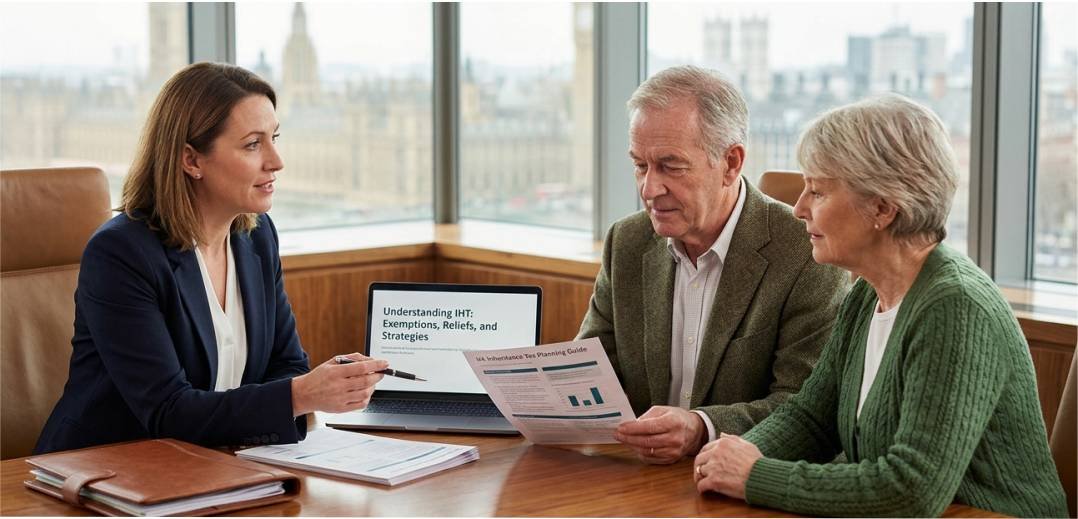
Inheritance tax planning does not necessarily require complex financial structures or sophisticated legal arrangements. In many cases, the most effective starting point is simply understanding the current value of the estate and identifying whether future tax exposure exists.
Families should consider reviewing property values, investment portfolios, life insurance arrangements, gifting histories, and existing wills. Those with larger estates may also wish to seek professional advice regarding trusts, business relief, agricultural relief, or other planning opportunities that may be available.
The earlier these conversations take place, the more options are usually available. Leaving estate planning until later life can limit flexibility and reduce the effectiveness of certain strategies.
Wrapping-up
Inheritance tax planning in 2026 is about more than reducing a future tax bill. It is about ensuring that family wealth is transferred efficiently, protecting assets that may have taken decades to build, and providing clarity for future generations.
With property prices remaining elevated and inheritance tax thresholds still frozen, more families are likely to encounter inheritance tax issues than ever before. Taking the time to understand the available allowances, exemptions, and reliefs can help ensure that more of an estate reaches loved ones rather than being lost unnecessarily to taxation.
FAQ’s on UK Inheritance Tax Planning 2026
What is the inheritance tax threshold in the UK for 2026?
The standard Nil Rate Band remains £325,000 per person, while an additional Residence Nil Rate Band of up to £175,000 may be available when a qualifying property is left to direct descendants.
Can a married couple leave £1 million tax-free?
In many cases, yes. Through transferable allowances and the Residence Nil Rate Band, qualifying married couples and civil partners may be able to pass on up to £1 million before inheritance tax becomes payable.
What is the inheritance tax rate in 2026?
The standard inheritance tax rate is 40% on the taxable value of an estate above available allowances. Some estates that leave at least 10% of their net value to charity may qualify for a reduced rate of 36%.
Does the seven-year rule remove inheritance tax completely?
Not automatically. The outcome depends on the type of gift, the timing of the transfer, and whether the person making the gift survives for seven years after it is made.
Disclaimer
This article is provided for general informational purposes only and should not be considered tax, legal, or financial advice. Inheritance tax rules can be complex and individual circumstances vary. Professional advice should be obtained before making estate-planning decisions.
Official Sources
- HMRC Inheritance Tax: https://www.gov.uk/inheritance-tax
- GOV.UK Inheritance Tax Thresholds: https://www.gov.uk/government/publications/inheritance-tax-thresholds/inheritance-tax-thresholds
- GOV.UK Residence Nil Rate Band: https://www.gov.uk/guidance/check-if-you-can-get-an-additional-inheritance-tax-threshold
- HMRC Inheritance Tax Manual: https://www.gov.uk/hmrc-internal-manuals/inheritance-tax-manual
- House of Commons Library – Inheritance Tax Guide: https://commonslibrary.parliament.uk/research-briefings/sn00573/