
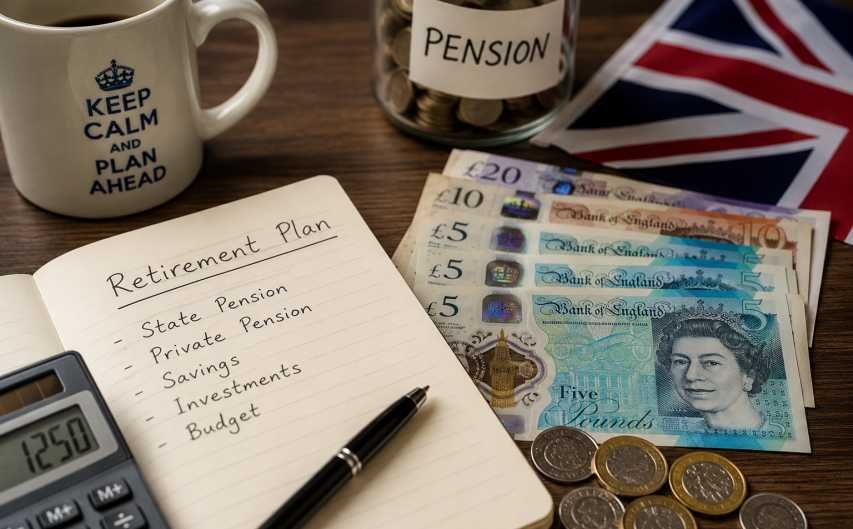

How much cash should you keep during retirement? It is a question that almost every retiree asks at some point. After years of building savings, pensions, and investments, retirement brings a new challenge. Instead of focusing on growing your wealth, you begin relying on it to pay your everyday expenses. That change makes managing cash just as important as choosing investments because the decisions you make today can affect your financial security for many years.
Many people assume the safest approach is to keep a large proportion of their retirement savings in cash. Others believe almost every pound should remain invested to maximize long-term growth. In reality, neither approach is suitable for everyone. Cash and investments perform different roles within a retirement plan. Cash provides stability, flexibility, and immediate access to money, while investments offer the opportunity for long-term growth that may help your savings keep pace with inflation.
One of the most important points to understand is that there is no official UK rule stating exactly how much cash every retiree should hold. The appropriate amount depends on your personal circumstances, including your monthly spending, other sources of retirement income, health, investment strategy, and willingness to accept market fluctuations. A retiree receiving a secure defined benefit pension may have very different cash requirements from someone relying mainly on pension drawdown and investment income.
Rather than searching for a universal percentage or a simple formula, it is more useful to understand why cash matters, what risks it helps manage, and how to decide whether your current cash reserve is appropriate for your own retirement plan.
Why Cash Is an Essential Part of Retirement Planning
Retirement changes the way your finances operate. During your working life, a regular salary normally covers household bills while allowing you to save and invest for the future. Once you retire, employment income often reduces significantly or stops altogether. Your savings, pensions, and investments now become the primary source of income, which means every withdrawal deserves careful consideration.
Cash plays an important role because it gives you immediate access to money without needing to sell investments. Everyday expenses continue regardless of what financial markets are doing. Utility bills still arrive, insurance premiums still need to be paid, and unexpected costs such as replacing a boiler or repairing a roof rarely happen at a convenient time. Having accessible cash means these expenses can usually be covered without disrupting your long-term investment strategy.
Cash also provides something that cannot easily be measured on a balance sheet: confidence. Financial markets naturally experience periods of volatility, and even diversified portfolios can fall in value from time to time. Retirees who maintain an appropriate cash reserve often find it easier to remain patient during market downturns because they know their immediate spending needs are already covered. This can reduce the temptation to make emotional investment decisions based on short-term market movements.
At the same time, cash should not be viewed as a long-term growth asset. While savings accounts offer security and liquidity, inflation gradually reduces the purchasing power of money if interest earned consistently falls below rising prices. This is why retirement planning is rarely about choosing between cash and investments. Instead, it involves deciding how each can work together to support both today’s spending needs and tomorrow’s financial security.
There Is No Official Cash Rule for UK Retirees
Articles about retirement often suggest keeping one year’s living expenses in cash, two years of withdrawals, or a fixed percentage of your portfolio in savings. Although these ideas are widely discussed in personal finance, they should not be mistaken for official guidance.
In the United Kingdom, organizations that provide public financial guidance encourage retirees to assess their own circumstances rather than follow a single formula. Factors such as guaranteed retirement income, household spending, investment objectives, health, and personal comfort with investment risk all influence the amount of cash that may be appropriate.
For example, consider two retirees with identical investment portfolios. One receives a substantial workplace pension together with the State Pension, covering most essential household expenses. The second relies largely on flexible withdrawals from a defined contribution pension. Although their portfolios are the same size, their cash requirements may differ considerably because their income sources are different.
This is why retirement planning should focus on building a strategy that reflects individual needs instead of trying to match someone else’s asset allocation.
The Benefits of Holding Cash During Retirement
Cash may not deliver the highest investment returns over long periods, but it provides several important benefits that support a well-balanced retirement plan.
The most obvious benefit is liquidity. Cash held in an accessible savings account can usually be used immediately to pay routine expenses or deal with unexpected financial events. There is no need to wait for investments to be sold or for markets to recover before meeting essential commitments.
Cash also helps reduce what financial planners often call sequence of returns risk. This refers to the possibility that poor investment returns early in retirement could have a greater impact on long-term wealth because withdrawals continue while portfolio values are temporarily lower. A cash reserve can provide flexibility during these periods by allowing retirees to meet spending needs without immediately selling investments that have fallen in value.
Another advantage is improved financial resilience. Unexpected events are a normal part of retirement. A major home repair, replacing a vehicle, supporting family members, or meeting healthcare expenses can all place pressure on household finances. Having readily available cash means these costs can often be managed without making significant changes to a long-term investment plan.
Many retirees also value the peace of mind that comes from knowing they have immediate access to funds if circumstances change. While this benefit cannot be measured in financial terms, it often plays an important role in helping people feel confident about their retirement finances.
The Risks of Keeping Too Much Cash
Although cash provides flexibility, it also has limitations that should not be ignored. Unlike investments such as shares or diversified funds, cash savings generally aim to preserve capital rather than generate long-term growth. If inflation rises faster than the interest earned on savings, the purchasing power of that money gradually falls. Over a retirement that could last twenty or thirty years, even modest differences between inflation and savings interest rates may have a noticeable effect on future spending power.
Keeping excessive amounts in cash can also reduce the opportunity for long-term investment growth. Investments carry risk, and their value can fall as well as rise, but they have historically played an important role in helping many long-term investors combat inflation over extended periods. Holding too much cash may therefore increase the risk that retirement savings fail to maintain their real value over time.
This does not mean retirees should minimize cash holdings. Instead, it highlights the importance of finding an appropriate balance between liquidity and growth. The objective is to hold enough accessible cash to manage foreseeable spending while allowing the remainder of the portfolio to continue supporting long-term financial goals.
Factors That Should Influence Your Cash Reserve
Every retirement is different, which is why cash requirements vary from one household to another. Before deciding how much money to keep in easily accessible savings, it is worth considering the factors that have the greatest influence on your financial situation.
| Consideration | Why It Matters |
|---|---|
| Monthly essential spending | Higher regular expenses generally require greater accessible cash. |
| State Pension and workplace pensions | Guaranteed income may reduce reliance on cash savings. |
| Pension drawdown | Flexible withdrawals from investments often increase the importance of liquidity. |
| Investment allocation | Portfolios with greater exposure to shares may experience larger short-term fluctuations. |
| Health and future care needs | Potential healthcare costs may justify larger emergency reserves. |
| Home ownership | Older properties may require significant maintenance spending. |
| Emergency planning | Unexpected events should always be considered in retirement planning. |
| Personal comfort with investment risk | Confidence and peace of mind remain important financial considerations. |
Reviewing these factors each year helps ensure that your cash reserve continues to reflect your circumstances. Retirement is not static. Spending patterns, health, markets, and personal priorities all change over time, and your financial strategy should adapt accordingly rather than remain fixed for decades.
Finding the Right Balance Between Cash and Investments
One of the biggest misconceptions about retirement planning is that cash and investments compete with each other. In reality, they perform different jobs within a well-managed retirement portfolio. Cash is designed to provide stability and immediate access to money, while investments are intended to support long-term growth and help preserve purchasing power over time.
A retiree who keeps every pound invested may achieve stronger long-term returns if markets perform well, but they may also face difficult decisions during periods of market volatility. On the other hand, someone who keeps an excessive proportion of their wealth in cash may enjoy greater short-term security but could find that inflation gradually erodes the real value of those savings over many years.
The objective is not to choose one approach over the other. Instead, it is to build a portfolio in which cash supports short-term spending while investments continue working toward longer-term financial goals. The balance should reflect your income needs, lifestyle, health, tax position, and overall retirement strategy.

Understanding Sequence of Returns Risk
One of the most important concepts in retirement planning is sequence of returns risk. Although the term sounds technical, the idea is relatively straightforward.
During your working years, market declines can often be viewed as temporary because you continue earning an income and making contributions to your pension or investment accounts. Retirement changes this dynamic. Once regular withdrawals begin, poor investment performance early in retirement can have a much greater impact than similar losses later in life.
Imagine two retirees with identical investment portfolios who experience the same average annual return over twenty years. If one encounters several years of poor market performance immediately after retiring while continuing to withdraw income, their portfolio may recover more slowly because investments are being sold at lower values. The second retiree, who experiences stronger returns during the early years of retirement, may finish with significantly more wealth even though both achieved the same average return over the full period.
This illustrates why maintaining an accessible cash reserve can be helpful. Cash may allow retirees to meet planned spending needs without immediately selling investments after a significant market decline. It does not eliminate investment risk, but it can provide valuable flexibility during periods of uncertainty.
Building a Retirement Cash Strategy
Rather than deciding on a single percentage of cash, many retirees find it helpful to think about the purpose of each part of their savings.
The first priority is everyday spending. Regular household expenses such as food, utilities, insurance, council tax, transport, and routine healthcare should be considered separately from discretionary spending. Knowing the difference between essential and optional expenses provides a clearer picture of how much readily available cash may be needed.
The second priority is emergency planning. Even well-prepared retirees occasionally face unexpected costs. Home repairs, replacing household appliances, helping family members, or dealing with temporary health issues can all require immediate access to funds. Setting aside money specifically for these situations may reduce the need to interrupt long-term investments.
The final priority is long-term growth. Money that is unlikely to be required in the near future may have more opportunity to remain invested, depending on individual objectives and tolerance for investment risk. Investments carry no guarantee of positive returns, but they have historically played an important role in helping many long-term investors manage the effects of inflation.
Thinking about retirement savings in terms of purpose rather than percentages often leads to more balanced financial decisions.
Example Scenarios
The following examples are intended to illustrate how different retirement circumstances can influence cash planning. They are not recommendations and should not be interpreted as universal targets.
| Retirement Situation | Possible Considerations |
|---|---|
| State Pension covers most essential spending | Smaller accessible cash reserve may be sufficient because regular income supports day-to-day living costs. |
| Income depends largely on pension drawdown | Greater liquidity may provide flexibility during periods of market volatility. |
| Significant planned expenditure within the next year | Keeping funds in accessible savings may reduce the need to sell investments at short notice. |
| High exposure to equity investments | Some retirees may prefer additional cash to help manage short-term market fluctuations. |
| Ongoing healthcare or property maintenance costs | Larger emergency reserves may improve financial resilience. |
These examples demonstrate that cash requirements depend on personal circumstances rather than portfolio size alone.
Inflation Should Never Be Ignored
Retirees often focus on preserving capital, but preserving purchasing power is equally important. Inflation gradually increases the cost of everyday goods and services, reducing what savings can buy in the future.
For example, household bills, insurance premiums, food, travel, and maintenance costs may all rise over time. Even relatively modest inflation can significantly affect living costs during a retirement that lasts twenty or thirty years.
Cash remains valuable because of its stability and accessibility, but relying too heavily on savings accounts over the long term may create another type of risk. If savings earn less than inflation for an extended period, purchasing power gradually declines.
This is why many retirement strategies seek to balance accessible cash with investments that may offer the potential for long-term growth. The objective is not to eliminate inflation risk completely but to reduce its effect while maintaining sufficient liquidity for everyday spending.
A Practical Example
Consider David and Sarah, a retired couple living in the Midlands. David receives the full UK State Pension together with a workplace defined benefit pension. Sarah receives the State Pension and has a defined contribution pension invested in a diversified portfolio. Together, their guaranteed income covers most routine household expenses, including council tax, utilities, insurance, and groceries.
They initially considered moving a large proportion of their investments into cash because they were concerned about market volatility. After reviewing their finances, however, they realised that most essential spending was already supported by guaranteed income. Instead of transferring a significant part of their portfolio into cash, they decided to maintain an accessible savings reserve for emergencies while leaving the remainder of their investments aligned with their long-term objectives.
Several months later, financial markets experienced a temporary decline. Because they had sufficient cash to cover planned spending and unexpected household repairs, they were not forced to sell investments during the downturn. Their long-term investment strategy remained unchanged, and they were able to review their position calmly once markets stabilized.
This example illustrates an important point. Cash is not intended to replace long-term investing. Its primary purpose is to provide flexibility, stability, and confidence when short-term financial needs arise.
Common Mistakes Retirees Make
Managing cash during retirement is often more challenging than it appears. Several common mistakes can reduce financial flexibility or increase long-term risk.
One frequent mistake is allowing fear of market volatility to drive every financial decision. Moving excessive amounts into cash after a market decline may reduce future growth potential without improving long-term financial security.
Another common issue is failing to review cash holdings regularly. Retirement is not static. Spending patterns, tax rules, healthcare needs, and investment values all change over time. A cash reserve that seemed appropriate several years ago may no longer reflect current circumstances.
Some retirees also overlook the importance of inflation. Although cash provides security, its purchasing power should be reviewed periodically, particularly during periods of rising prices.
Finally, many people focus exclusively on investment returns while paying too little attention to household spending. Understanding where money is actually being spent often has a greater influence on retirement sustainability than making frequent changes to an investment portfolio.
Taking a balanced approach that considers spending, income, investment risk, and long-term objectives is generally more effective than relying on a single rule or reacting to short-term market events.
How to Review Your Cash Position Every Year
Retirement planning is not something that should be completed once and then forgotten. Your financial situation will almost certainly change over time. Living costs may rise, investment values will fluctuate, tax rules may change, and your own lifestyle or health needs may evolve. For these reasons, reviewing your cash position at least once a year is a sensible habit.
An annual review does not necessarily mean making major changes. In many cases, it simply involves checking whether your existing cash reserve still supports your financial goals. If your spending has increased because of higher energy bills or additional healthcare costs, you may decide that holding slightly more accessible cash would improve your financial flexibility. Conversely, if your expenses have fallen or your guaranteed income has increased, you may conclude that your existing cash reserve is larger than necessary.
Reviewing your cash position alongside your pension withdrawals and investment portfolio can also help ensure that each part of your retirement plan continues to work together. Rather than looking at savings, pensions, and investments separately, consider how they support your overall income needs throughout retirement.
Questions Worth Asking During Your Annual Review
A structured review often produces better decisions than relying on instinct alone. Before making changes to your retirement cash reserve, consider the following questions.
- Have my essential monthly expenses increased or decreased?
- Has my State Pension or workplace pension income changed?
- Am I planning any significant spending during the next twelve months?
- Has my attitude towards investment risk changed?
- Have I experienced any major changes in my health or family circumstances?
- Have I updated my emergency fund following unexpected spending?
- Does my current investment strategy still reflect my retirement objectives?
These questions encourage a broader review of your financial situation rather than focusing solely on the balance shown in your savings account.
Retirement Cash Planning Checklist
The following checklist can help you assess whether your current approach remains appropriate. It is designed as a planning tool rather than a set of mandatory rules.
| Review Area | Questions to Consider |
|---|---|
| Monthly spending | Do I know how much I spend on essential household costs each month? |
| Guaranteed income | Does my State Pension and any workplace pension cover most of my regular expenses? |
| Emergency savings | Could I deal with an unexpected household repair without selling investments immediately? |
| Investment withdrawals | Am I comfortable with my current pension drawdown strategy? |
| Inflation | Have I considered how rising prices may affect my spending over the coming years? |
| Planned expenses | Have I set aside money for holidays, home improvements, or major purchases? |
| Portfolio review | Have I reviewed my investments and cash position during the last twelve months? |
Completing this review annually can help identify small issues before they become larger financial challenges.
When It May Be Worth Reviewing Your Cash Strategy Sooner
Although an annual review is suitable for many retirees, certain life events may justify revisiting your cash position earlier.
Examples include:
- Retirement itself or a significant change in retirement income.
- Beginning or changing pension drawdown.
- Selling a property.
- Receiving an inheritance.
- Major home renovations.
- Significant medical expenses.
- Marriage, divorce, or the death of a spouse or partner.
- Large changes in investment values.
- Changes to tax legislation affecting your retirement income.
Major financial decisions often affect several parts of a retirement plan at the same time. Reviewing your cash reserve alongside these changes can help maintain a balanced approach.
Practical Lessons for UK Retirees
There is a natural temptation to search for a simple answer when planning retirement. Unfortunately, the question of how much cash to hold does not have a universal solution.
Some retirees enjoy the reassurance of holding larger cash balances because they value certainty and flexibility. Others are comfortable maintaining smaller cash reserves because guaranteed pension income covers most essential spending and they are willing to tolerate investment fluctuations. Neither approach is automatically right or wrong. What matters is whether your financial decisions support your own retirement objectives while recognising the risks of both excessive cash holdings and insufficient liquidity.
Good retirement planning is rarely about predicting markets or identifying the perfect asset allocation. It is about understanding your income needs, preparing for unexpected events, reviewing your finances regularly, and ensuring that your savings continue supporting the lifestyle you want throughout retirement.
Retirement cash planning in 2026
While there is still no fixed formula for determining how much cash to keep during retirement, retirees in 2026 should consider several current factors, including the higher State Pension, savings interest rates, inflation, and expected future spending. Reviewing your cash reserve at least once a year alongside your pension income and investments can help ensure your retirement strategy continues to reflect changing economic conditions and your personal circumstances.
Final Insights
The question “How much cash should you keep during retirement?” does not have a single answer because every retirement is different. Household spending, guaranteed income, health, investment strategy, and personal comfort with risk all influence the amount of readily available cash that may be appropriate.
Cash remains an essential part of a well-balanced retirement plan because it provides liquidity, flexibility, and reassurance during periods of market uncertainty. At the same time, holding excessive amounts in cash for many years may reduce purchasing power if inflation consistently exceeds the interest earned on savings. The objective is therefore not to maximize cash or minimize it, but to strike a balance that supports both short-term spending needs and long-term financial resilience.
Reviewing your financial position regularly, understanding your income sources, planning for unexpected expenses, and maintaining a diversified approach can help you make informed decisions throughout retirement. Rather than relying on general rules or popular formulas, build a strategy that reflects your own circumstances and review it as your needs change over time.
Frequently Asked Questions
1. Is there an official UK recommendation for how much cash retirees should keep?
No. There is no official UK rule that specifies a fixed amount or percentage of cash every retiree should hold. The appropriate level depends on personal circumstances, including spending needs, retirement income, investments, health, and financial objectives.
2. Should I move all of my retirement savings into cash if markets become volatile?
Not necessarily. Market volatility is a normal part of investing. Moving all retirement savings into cash could reduce long-term growth potential and increase the impact of inflation. Decisions should be based on your overall financial plan rather than short-term market movements.
3. Does the UK State Pension reduce the amount of cash I may need?
For some retirees, yes. If the State Pension and any workplace pension cover a significant proportion of essential living expenses, you may rely less on cash savings for day-to-day spending. The appropriate amount still depends on your individual circumstances.
4. How often should I review my retirement cash reserve?
Reviewing your retirement cash position at least once a year is generally a sensible approach. You should also consider reviewing it after major life events, significant changes in spending, or adjustments to your retirement income.
Source Methodology
This article has been prepared using publicly available guidance and widely accepted retirement planning principles relating to cash management, pension income, investment risk, inflation, and long-term financial planning in the United Kingdom. It is intended to provide educational information rather than personalised financial advice and reflects the importance of considering individual circumstances when making retirement decisions.
Disclaimer
This article is provided for general educational purposes only and should not be regarded as personalised financial advice. Retirement planning depends on your individual circumstances, objectives, tax position, and attitude towards risk. If you are unsure about decisions affecting your retirement finances, consider seeking advice from a qualified financial adviser authorized to provide advice in the United Kingdom.
Official Sources
- Money Helper (Money and Pensions Service): https://www.moneyhelper.org.uk
- Financial Conduct Authority (FCA): https://www.fca.org.uk
- HM Revenue & Customs (HMRC): https://www.gov.uk/government/organisations/hm-revenue-customs
- Bank of England: https://www.bankofengland.co.uk
- Office for National Statistics (ONS): https://www.ons.gov.uk